Asmeret was interviewed by Newsweek for a discussing the environmental damage caused by armed conflicts.
Link to the full piece
Author: aaberhe
-

Environmental cost of wars
-

In Science We Trust?
Asmeret was featured by the American Chemical Society, C&EN in a timely piece discussing the importance of cultivating societal trust in science and scientists.
Direct link to the audio https://lnkd.in/gRqKYCit
Link to the full piece https://lnkd.in/gahwChnx -
SOIL = HISTORY
By Asmeret Asefaw Berhe
Professor of Soil Biogeochemistry and Falasco Chair in Earth Sciences and Geology
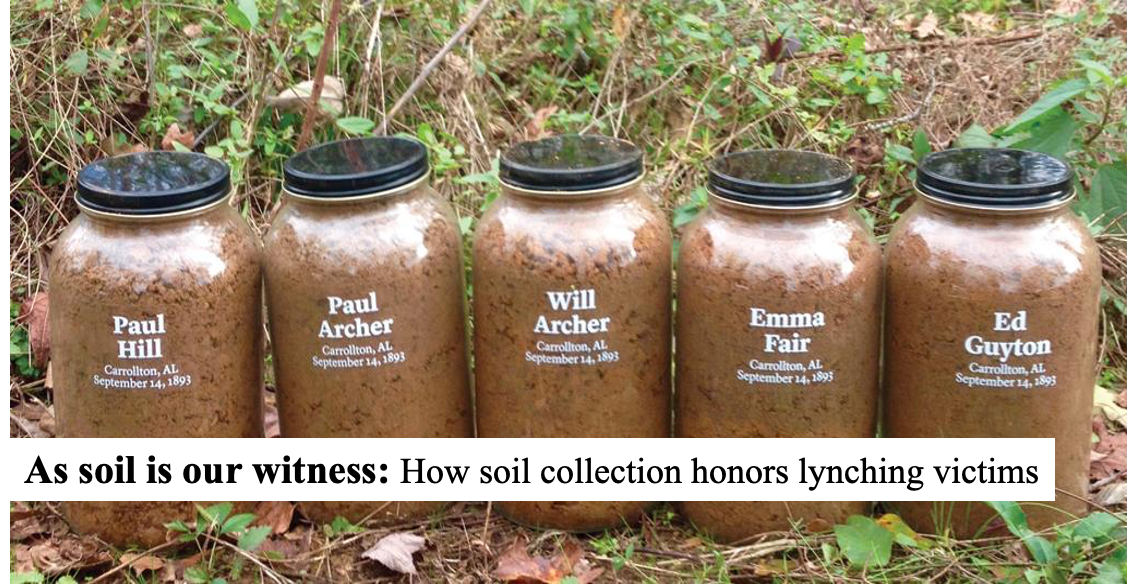
University of California, Merced (aaberhe.com) [†]In Montgomery, Alabama, there is a moving exhibit with rows of glass jars lining the walls of the Memorial for Peace and Justice. Each jar contains soil—unremarkable brown earth that many of us take for granted and might barely notice in its natural habitat. But these jars hold something extraordinary: soil collected from some of the sites where more than 4,400 Americans were lynched between Reconstruction and World War II.
As a soil scientist, I was struck by the profound symbolism when I first learned about this collection, created by a partnership between the Equal Justice Initiative (EJI) and MASS (Model of Architecture Serving Society) design group. For too many people, soil is just dirt. To me, it’s a living archive, and these jars represent one of the most powerful witnesses to America’s history of racial violence. Learning about the soil collection was a powerful reminder of how soil remembers history.
When the Ground Holds Memory
Long after the victims, aggressors, and witnesses to the violence have died and their memories have faded, the earth remembers what happened on its surface. Every drop of blood and other bodily fluids from the victims gets absorbed into the ground to become part of an enduring record. Microscopic traces of human presence—like the remains of all living things on land—can persist in soil for generations, creating a molecular memory of violence that official records often fail to document.

This isn’t just a poetic metaphor—it’s a scientific reality. Soil is a complex ecosystem where organic matter derived from formerly living organisms’ remains breaks down slowly compared to if they were left on the surface, where chemical signatures of life linger for decades, centuries, and even millennia to tell stories of formerly living organisms. Long after the horrific acts of lynching occurred, the soil where the victims stood remains, holding invisible testimony to their final moments.
The Great Equalizer
There’s something profound about soil as a symbol of justice. All living things on land owe our existence to the precious soil under our feet. Soil is the ultimate equalizer—we all come from it and return to it. Rich or poor, Black or White, oppressor or oppressed, we’re all made of the same basic elements that were mostly derived from soil and will eventually rejoin the earth. The lynching victims and their murderers shared this fundamental connection to the soil beneath their feet, even as one group sought to deny the other’s basic humanity.
The soil collection is also a powerful reminder of the rootedness and cyclical nature of human connections with soil. For human communities, our existence and belonging to a place are grounded in the soil of the places we call home. The violent acts of lynching sever the connection victims have with their home and community. The collection and preservation of the soil from the lynching locations allows the victims to hold their rightful place on this earth and in history. The soil collection restores the victim’s connection with the land.
Underground Networks and Cycles
I’ve been studying soil science for over 30 years. The more I study soil, the more I discover how it mirrors the social systems we’ve built above ground. Healthy soil depends on incredible diversity—that includes plants, bacteria, fungi, insects, worms, and countless other organisms working together in complex relationships. Soil supports more life (in terms of both abundance and diversity) than anywhere in the Earth system. Different groups of organisms are responsible for regulating essential life processes. Diversity and biological interdependence in belowground communities are crucial for the healthy functioning of the soil system. Soil is the ultimate demonstration of how diversity is critical for the health and resilience of communities.
Soil is in a continuous cycle of building and destruction. Soil forms from hard rock, and over millennia and longer periods of time, transforms into a fertile medium that can support life, recycle our waste, control our climate, and allows us to enjoy habitats and clean water. After much weathering, erosion, and exposure to heat and pressure, the soil also returns to the earth as rock – as the cycle continues over and over again through eternity. Though the continuous cycles of transformation via birth, growth, death, and decay of living things, soil stands in stark contrast to violence like lynching, which only aims to destroy. Soil offers something that human justice systems often fail to provide—transformation. While violence seeks only to destroy, soil takes death and decay and transforms them into new life. Flowers bloom from the same ground where blood was spilled. Soil nurtures even seeds that fall on the ground during harsh times, and life grows at the very sites of horror. The earth doesn’t simply archive the trauma. The remains of those who lived are continuously transformed into something that can sustain the lives of future generations.
Seeds of Hope
Perhaps the most powerful lesson soil teaches us is about resilience and restoration. Damaged soil ecosystems can recover, but it takes time, patience, and careful tending. The same is true for communities scarred by violence. Healing is possible but requires sustained effort, acknowledgment of what came before, and intentional tending of the damage.
The Memorial for Peace and Justice, with its 700 jars of collected soil, creates space for this kind of healing. By creating this lasting memorial that honors the victims and the underlying earth that witnessed one of the nation’s darkest moments. The memorial transforms the community’s connection with their life-giving land. The memorial helps restore the connection that the victims had with the land they called home, allowing there to be continuity from the victims of the past and the surviving community members of today. It ensures that their stories remain rooted in our collective consciousness.
The soil remembers, in case we may forget. It holds on to the truth, even if we prefer to find comfort in distorting history or telling lies to cover up gross injustices. And it offers transformation when we’re ready to do the hard work of growing something better from the ground up. In these jars of earth, we find both witness and hope—a reminder that even our most shameful history can become fertile ground for a more just future if we’re willing to tend it with the care it deserves. The soil collection is a critical reminder of history, sometimes difficult but ever important for understanding who we are as a community.
[†] I’m grateful to the Equal Justice Initiative for their feedback on the piece and permission to use photos.
-
Asmeret on NH Public Radio
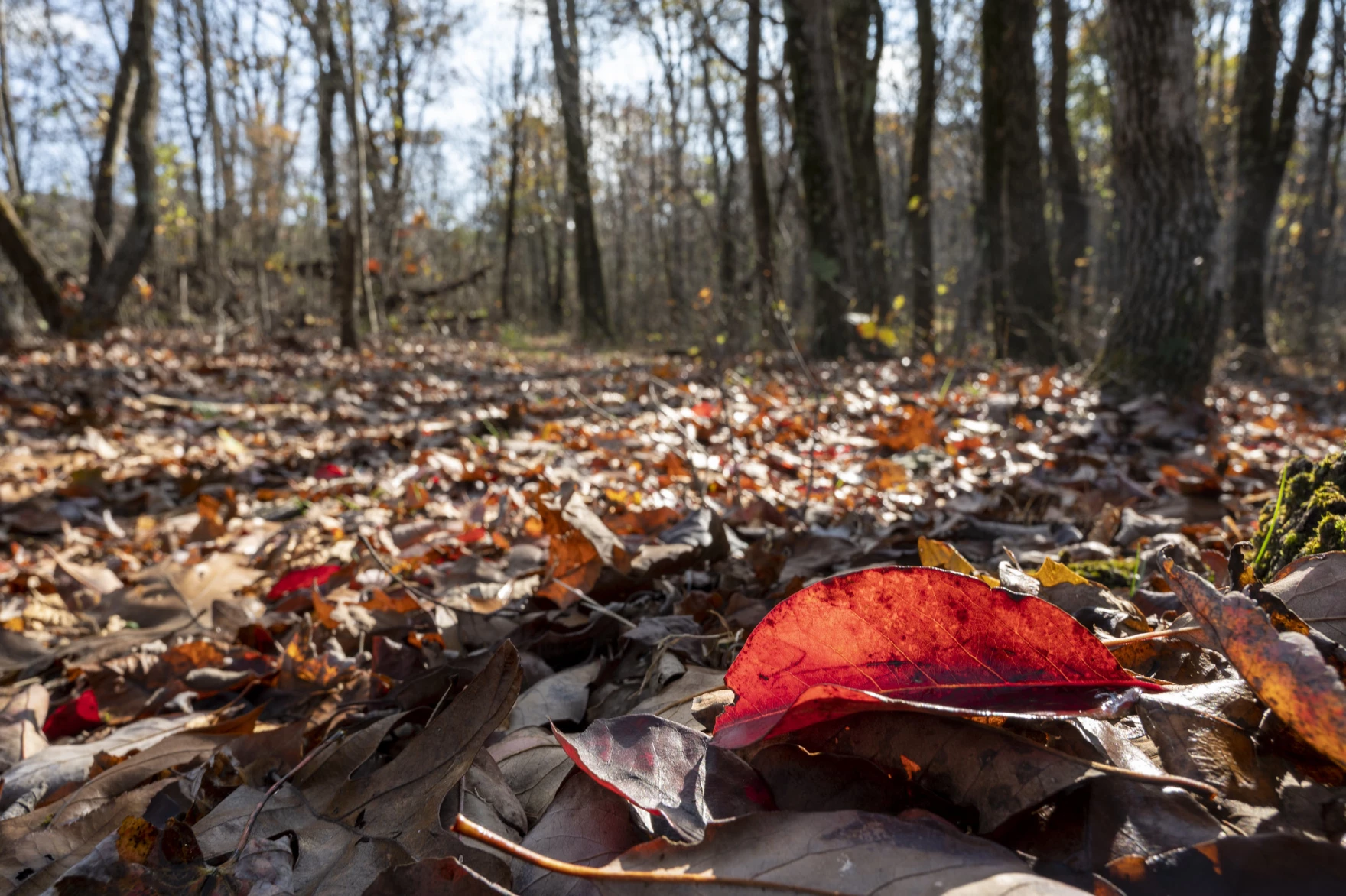
 Asmeret got to join New Hampshire PublicRadio to answer listener question on the implications of raking the leaves that fall on to the ground during the fall season 🍃 🍁 🍂. Listen to the full discussion on this link.
 -

New Pub: “Defining soil science: Balancing fundamental research and societal needs” in Soil Science Society of America Journal

In this commentary, Teamrat A. Ghezzehei and I argue that while soil science is crucial for addressing global challenges like climate change and food security, it should not be defined solely by its practical applications.
Just as astronomy studies celestial objects without limiting itself to space exploration applications, soil science must maintain its identity as a fundamental natural science that explores Earth’s complex living skin across scales – from molecular interactions to continental processes.
History shows us that the most transformative scientific solutions often emerge from curiosity-driven research, not just problem-focused/use-inspired approaches. As we face unprecedented environmental challenges, soil science’s greatest contributions will come from maintaining intellectual freedom to truly understand one of Earth’s most complex systems.
Read the full paper to explore our proposed definition for soil science and why it matters for the future of our field. https://lnkd.in/ey7S49yB -

New Pub alert: How deep-rooted perennials change carbon dynamics in subsoils.
 In this paper we showed that: (1) deep-rooted perennials stimulate the transfer of more atmospheric C to both surface and subsoils than shallow-rooted annuals, (2) newly generated SOC under deep-rooted perennials is relatively less protected from decomposition, and (3) reaping the C benefits of deep-rooted perennials could require maintaining the land cover as a perennial cropping system.
 -

PhD student position available to join Berhe lab
We are recruiting grad student(s) interested in soil biogeochemistry for Fall 2024.
Prospective grad student applicants should contact Prof. Berhe.

-

Asmeret on TED Radio Hour
Asmeret was interviewed about soil, carbon sequestration, and climate change on a neat episode of #NPR‘s @TEDRadioHour “What lies Beneath“. A direct link to Asmeret’s part is here: “Asmeret Asefaw Berhe: How can soil’s superpowers help us fight climate change?“

-
Zach and Anna receive awards!
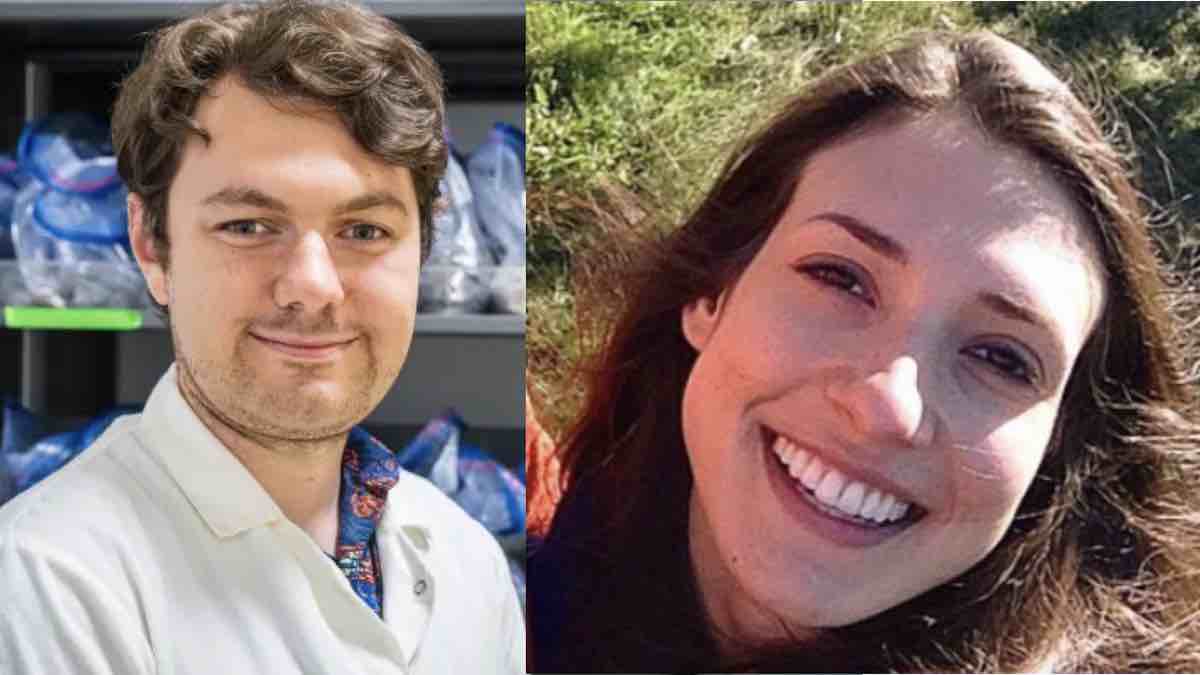
Celebrating the wonderful accomplishments of our Ph.D. students Anna and Zach!
Congratulations to Zach, our Ph.D. student (co-advised with Prof. Rebecca Ryals) for receiving the Ecological Society of America’s (ESA) Katherine S. McCarter Graduate Student Policy Award. Go, Zach!!
see this UC Merced news article about Zach.
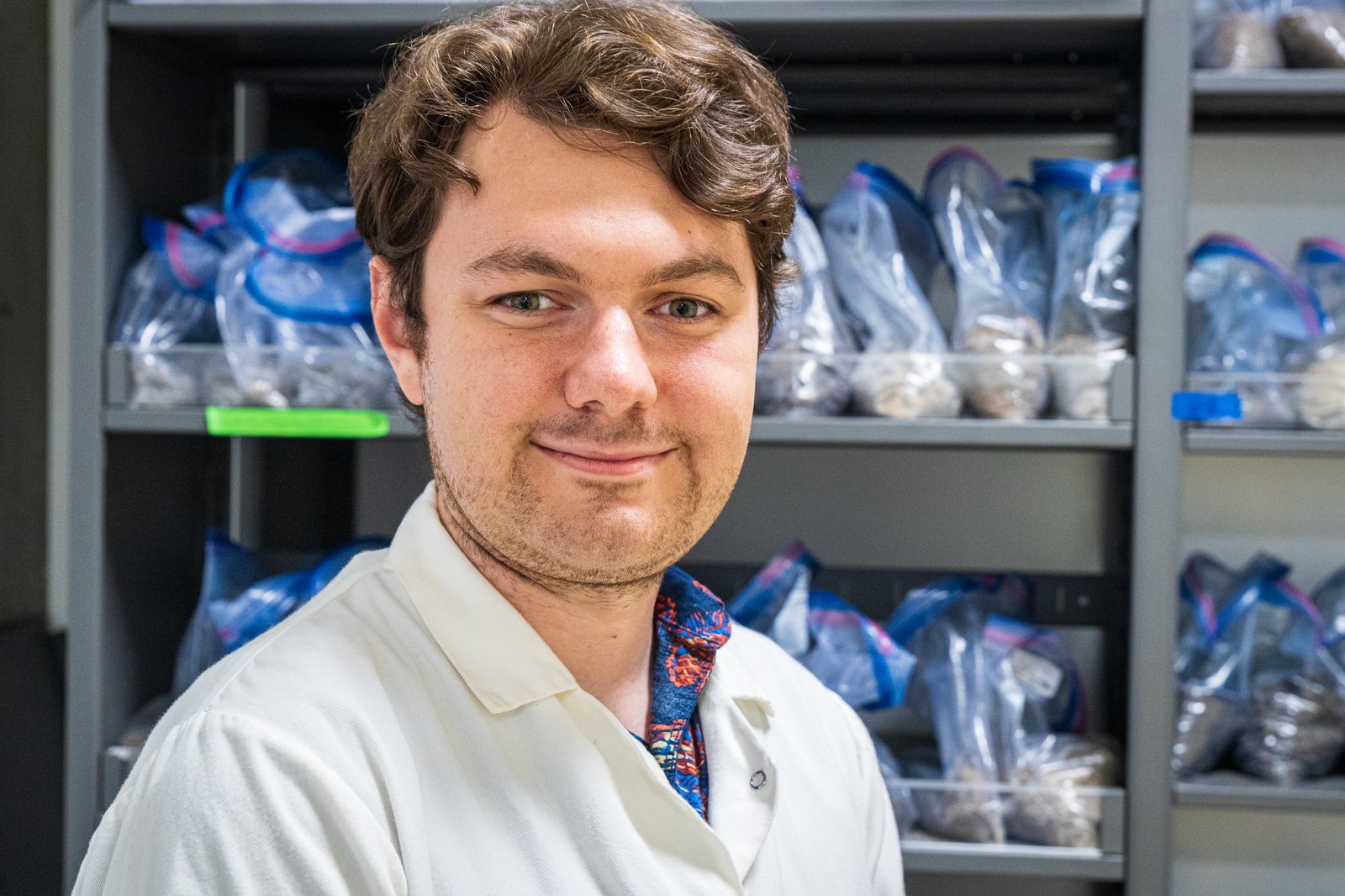
Congratulations also to Anna for receiving a full year of funding to support her dissertation research from the National Science Foundation-funded CONDESA project.
Read more on CONDESA in this link.

-
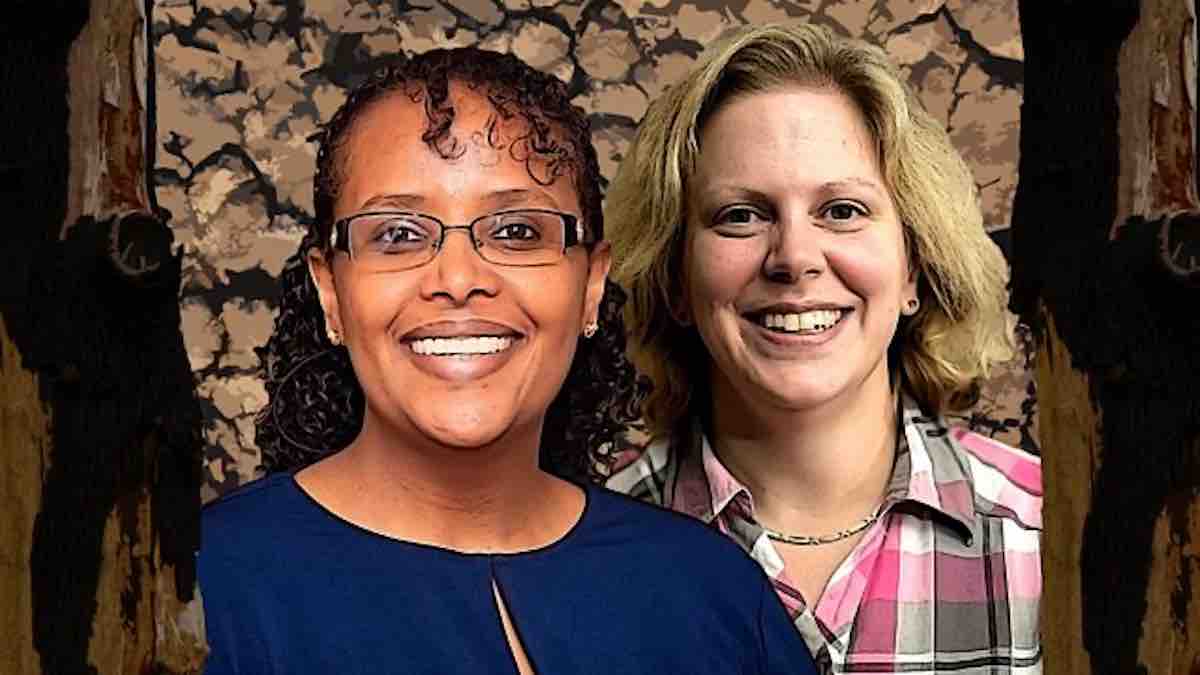
Asmeret on BBC World Service.
Asmeret discussed the impacts of climate change on women on BBC World Service’s The Conversation with host Kim Chakanetsa and co-panelist and Dr. Katharine Vincent.
